Table of Contents
No. A lot of count on adjustment that breaches policies and creates inadequate writing. Bypassing hides; humanizing enhances. Moral humanizers improve language, not deceive detectors. Yes. It helps users write naturally, maintain creativity, and validate text sensibly. Inspect your institution's policy, humanize responsibly, confirm authenticity, and divulge if needed. Rather than looking for shortcuts, discover exactly how to compose naturally and transparently.
If a piece of composing includes several of these qualities, it might increase a flag. Yet that doesn't always suggest it was created by AIjust that it shares some of the features typically found in AI-generated message. AI detection tools can provide helpful understanding, however they aren't foolproof. Most make use of statistical versions to determine creating that "looks" like AI outputbased on patterns like uniform framework, high predictability, or lack of individual information.
Does Turnitin detect StealthWriter
Due to the fact that AI writing is evolving rapidlyand because human writing differs widelyno discovery device can assure perfect accuracy. That's why discovery results ought to be dealt with as probability-based signals, not definitive proof. Learn a lot more concerning AI detection precision in our write-up that studies just how these devices workand where they drop short.

The goal isn't to "cheat" AI detectors or conceal your usage of these toolsit's to make certain your final piece really feels authentic, individual, and unmistakably your own. Here are a couple of methods to collaborate with AI while keeping your writing grounded in your own voice: Believe of AI as a composing assistant, not the primary writer.
Choose vibrant, specific, and psychologically resonant words in order to make your composing unmistakably human. Learn what words and expressions are indicators of AI-generated content right here. Everybody needs an editorespecially when you've been looking at something for a very long time. A close friend or coworker can aid detect repetitive phrasing, awkward sentences, and factual inaccuracies.
However at the end of the day, your ideas, your point of view, and your voice are what make creating resonate with visitors. When AI is utilized without an understanding of just how to use it properly, it can result in unintended consequences, like: Plagiarism Excessively generic or standard content Violations of academic honesty policies A loss of originality, personality, or reliability Below's an idea: When in question, be clear.
Does Turnitin detect StealthWriter
It shows stability, stays clear of misunderstandings, and builds trust fund with your audience. In academic and expert settings especially, it's essential to be clear regarding the duty AI plays in your creating procedure. Some institutions may anticipate AI-generated material to be pointed out or disclosed, similar to any various other resource. When expectations are unclear, it's ideal to ask inquiries, examine relevant plans, or include a citation revealing that AI was made use of.
At Grammarly, we think responsible AI use has to do with boosting human creativitynot replacing it. When you lead with intention, originality, and clearness, your writing is most likely to mirror who you are and what you absolutely indicate to say. And with devices that support transparency, you can really feel much more positive browsing the evolving technology.
You must never depend on the outcomes of an AI detector alone to determine whether AI was made use of to create web content. AI detectors can identify patterns located in human writing and AI-generated text, yet they can not definitively end whether or not AI was utilized. These tools need to be one component of a holistic method to evaluating creating originality.
Bypassing discovery ethically does not imply hiding those patterns it implies rewriting your text into real human form while keeping your message exact. The goal isn't evasion. The objective is. If you want AI-assisted text to sound natural, you don't need to "defeat the system." You just require to write and reword the way people communicate.
Does Turnitin detect StealthWriter
Practical actions to make AI-assisted composing all-natural, effective, and moral: Enhance tone, rhythm, and quality. Make use of an AI detector to validate patterns. AI tends to produce "too perfect" sentences.
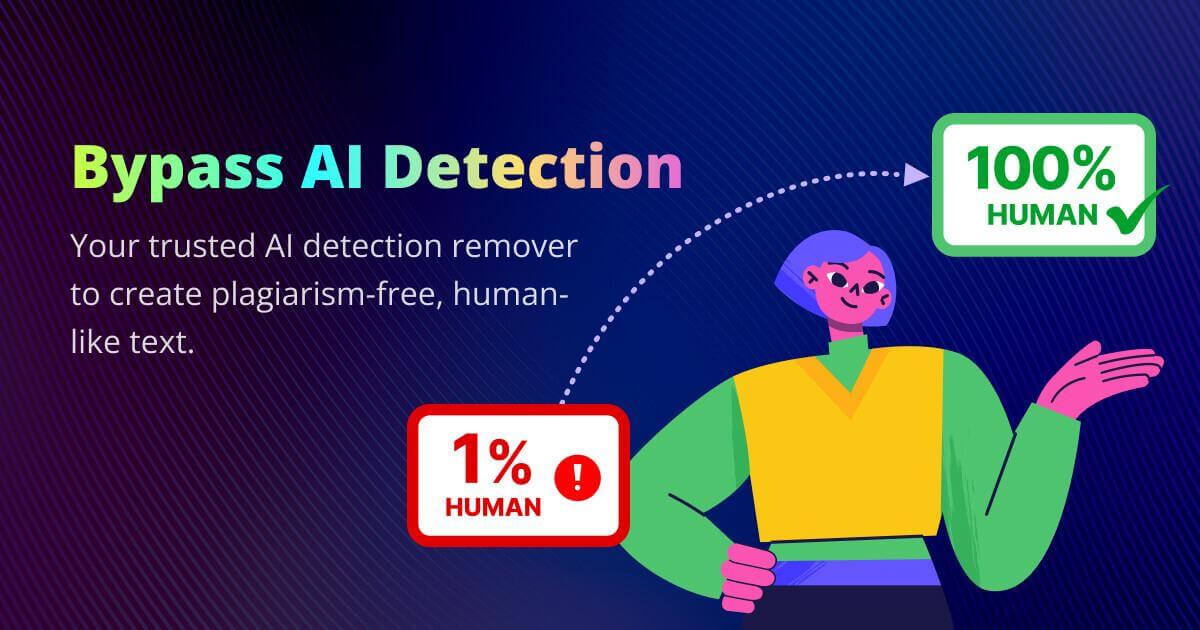
A trainee makes use of ChatGPT for brainstorming, then revises and humanizes their essay with Hastewire. The last work mirrors their understanding and complies with college transparency standards. A customer pastes message into an "undetected AI" device that shuffles words to method detectors. The outcome ends up being mute and gets flagged anyway. You can bypass AI detectors lawfully only by guaranteeing your creating comes to be truly human not unnaturally disguised.
No. Most count on control that violates plans and produces inadequate writing. Bypassing hides; humanizing boosts. Honest humanizers boost language, not trick detectors. Yes. It helps users create normally, maintain originality, and validate text sensibly. Examine your establishment's policy, humanize properly, confirm authenticity, and divulge if needed. Rather of looking for shortcuts, find out exactly how to compose naturally and transparently.

Navigation
Latest Posts
Does Turnitin detect StealthWriter
Does Turnitin detect StealthWriter
Does Turnitin detect StealthWriter